Tuesday, August 9, 2011

Not your Normal Business School Internship: A Father's Dream

I’m Haley Bash, a sophomore studying business at the University of Michigan. When I began my search for summer internships, I hoped to find an organization that focused on giving people empowerment rather than handouts. I discovered Unión Microfinanza and immediately knew I’d found the right place to spend my summer: La Unión, Honduras.

Microfinance has a steep learning curve. Each day I’m challenged to expand and balance both my formal business knowledge and cultural understanding of La Unión.

An essential part of this learning process is to visit producers. We ask questions about their lives and how UMF can help to improve them. On one occasion I went to the aldea, village, of Las Peñas. The trip was an uphill battle in the most literal sense– gradation here can reach nearly ninety degrees.

I made the journey with Daniel Schwartz and Suijth Yankanaik. When we arrived at the home of one the producers we were to interview I discovered a gaggle of adorable kids. Throughout the interview, they popped in and out of the room, curious as to why three furiously scribbling gringos were in their house.

Once two other Las Peñas producers arrived—one of which was the town pastor—they began to open up to us about their struggles and how UMF has helped them overcome them. They told us how they’d like to see UMF expand in the future, from opening savings accounts to providing coffee de-pulpers.

It was wonderful to hear that UMF has already made such an impact on their lives and even better to hear that they have confidence in the organization to transform their lives even further.

We eventually moved on to a more personal question: what dreams do you have for your family? The pastor looked each of us directly in the eye and said, “Every father’s dream is for his child to succeed professionally, but without the economic resources, this dream becomes a struggle.”

We asked what the hopes for their community were too. Answers varied, but popular suggestions were latrines and water filters. Daniel told the men, “We will help you guys get these latrines, these water filters. Maybe not tomorrow, or next week, but we will help you.”

After that moving conversation, the pastor showed us his finca (coffee field). He was one of the producers who had a coffee crop of a high enough quality to sell to specialty buyers in the United States.

Being able to meet the community that the organization is serving and see the products that they are creating has inspired me to my core. I hope to contribute to Unión Microfinanza as much as I can while in La Unión for the rest of the summer and beyond at the University of Michigan.

By Haley Bash

Wednesday, August 3, 2011

Transition

After six weeks in La Unión it is almost time for me to leave, and the feeling is bittersweet. It will be wonderful to go home to Michigan to see friends and family, but now I will be leaving behind my new friends in La Unión. The feeling I had upon arrival could not have been more different. Overwhelmed with anxiety, I didn’t know how I would survive six weeks in a rural mountain town surrounded by people with whom I couldn’t communicate. I like routines and familiarity, so I was quite distressed for the first week in my new environment. However, that feeling soon faded as I assimilated and quickly made new friends.

A telling anecdote of my changing views occurred a few weekends back on a trip to visit the Copan Ruins. It was especially notable since I would be visiting the ruins with my sister, the first real contact with home since arriving in Honduras. By the end of the weekend I was weary from travel and ready to return home…to La Unión. It occurred to me that all of the strange faces had become familiar, whether it is the pastor of the Evangelical church, the owners of the corner store, and especially those of our clients. I am accustomed to life in Honduras, and having managed to navigate the language barrier I can now more fully enjoy the company of locals.

As an intern in Honduras I have enjoyed the opportunity to meet the people UMF serves and see the impact UMF is having on their lives. Prior to arriving in Honduras I sought information about UMF on their website, but failed to realize the full extent of their operations. Through firsthand experiences I have grown to appreciate the difference they are making on a grand scale, which came clear during my efforts to update the Microloan Coffee website. This project forced me to ask detailed questions about the coffee UMF buys and the farmers they serve. After interviewing several coffee farmers in the village of El Sitio, they told me that UMF only buys high quality coffee for which they pay high prices, and therefore they are motivated to improve their techniques in order to reap these monetary benefits.

My experiences, coupled with the stories of the farmers, will help me when return to the U.S. to begin selling Microloan Coffee for UMF. I have seen where the producers live, spent time on their farms, saw the corn and bean fields in the village of San Agustin, and shared food prepared on the stoves UMF helped install in their homes. Rather than selling coffee where one doesn’t know who produced it, UMF is putting the farmers’ faces on their coffee by providing a direct link between these farmers and coffee buyers. I look forward to helping connect my Honduran home with my one in Michigan.

By Kyle Barkett

Monday, August 1, 2011

Uniting Objectives for Change

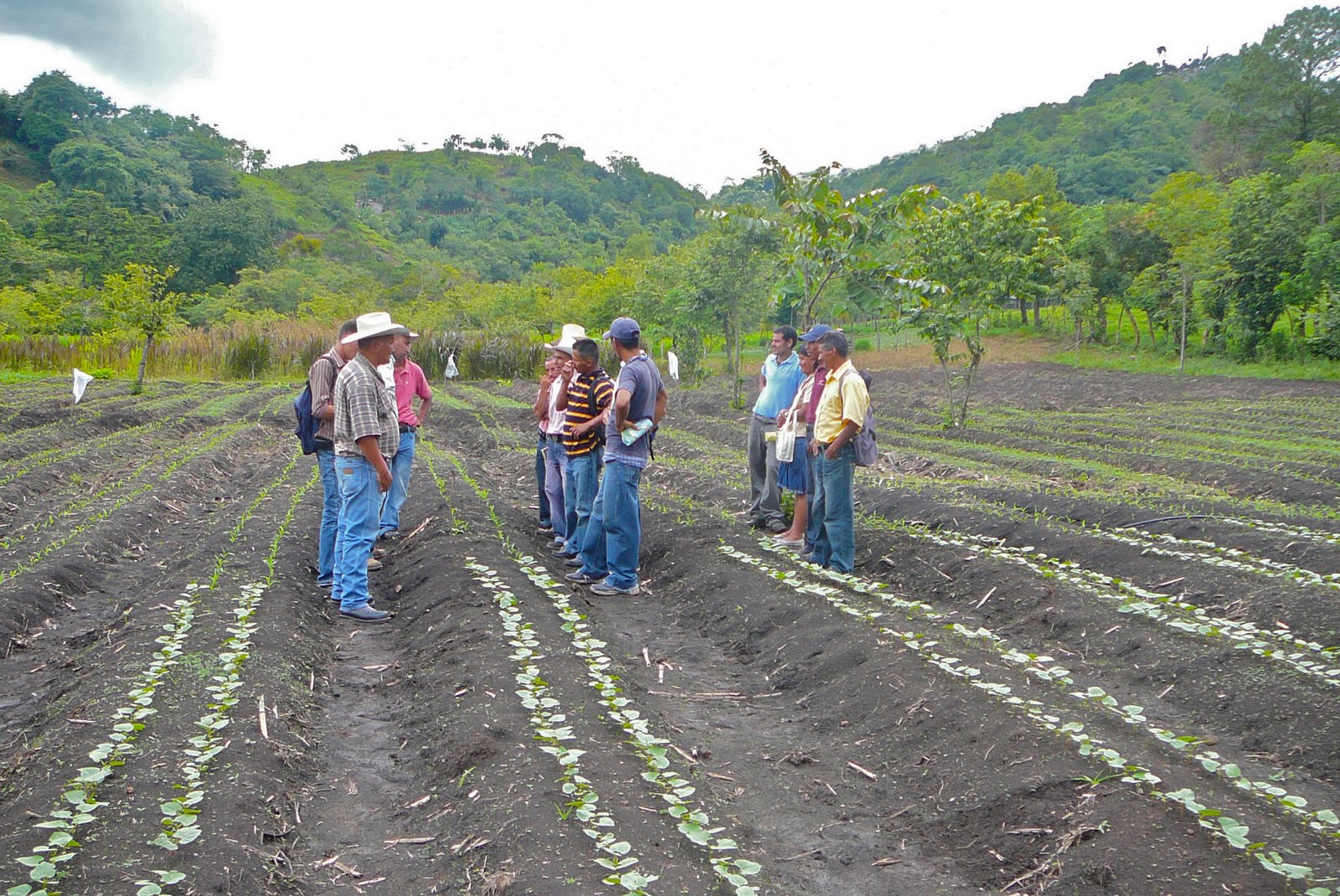
From distributing loans to helping small-scale farmers export their quality coffees to the States, Unión MicroFinanza is making a difference in the everyday lives of people here in La Unión. The assistance is visible, but one of the most interesting—and challenging—aspects of UMF’s efforts is to provide training via live seminars. I was lucky enough to attend one of these last week being spearheaded by USAID.

With the research I have been doing, I have come to terms with the fact that farming is far more complicated than one might initially imagine. Even the terminology (in English) is often beyond my comprehension. So, sitting through this seminar and listening to a USAID engineer explain best practices—in Spanish—I was thoroughly pleased to understand not only the vocabulary, but also the rationale of the material and the suggested methods for application. He made it simple enough, while emphasizing the technical aspects of each step. He asked the audience to consider practical ways to implement these methods in their own fields, and took everyone out to a model field to illustrate practicality and possibility of the instruction.

No single aspect of the assistance provided by UMF would be enough to make a significant difference. NGOs repeatedly fall short because they fail to root out the causes behind the social inequalities so prevalent in the developing world. There are many factors to consider, including culture, history, and available resources. Sadly, many organizations fail to take into account the sources of problems, but it is obvious that UMF is approaching the difficulties in Honduras with every tool available. Now, in coordinating our efforts with USAID, we have found another partner to assist us in striving toward our objectives.

When all is said and done, I can only hope that my work here leaves a lasting impact. It may be my optimism (or even slight naivety), but I feel like everything is falling into place with what I hope to accomplish. If farmers adopt these techniques, output could significantly increase and the impact of UMF loans will be amplified. Things can improve in La Unión, but the question remains: Will the producers break the cultural habits rooted by hundreds of years of familiarity and take the risk of implementing new methods?

By Josh Hall